Tinder is shining a light on the emojis that help singles flirt, tease, connect—and sometimes completely confuse each other. For Gen Z, emojis aren’t just playful icons—they’re a key part of how they express chemistry, humor, and even emotional nuance in dating.
According to internal Tinder data, around 20% of first messages on the app include at least one emoji. And when it comes to emoji use in bios and messages in 2025, United States, Brazil, Germany, France, Spain and the UK are taking the lead.
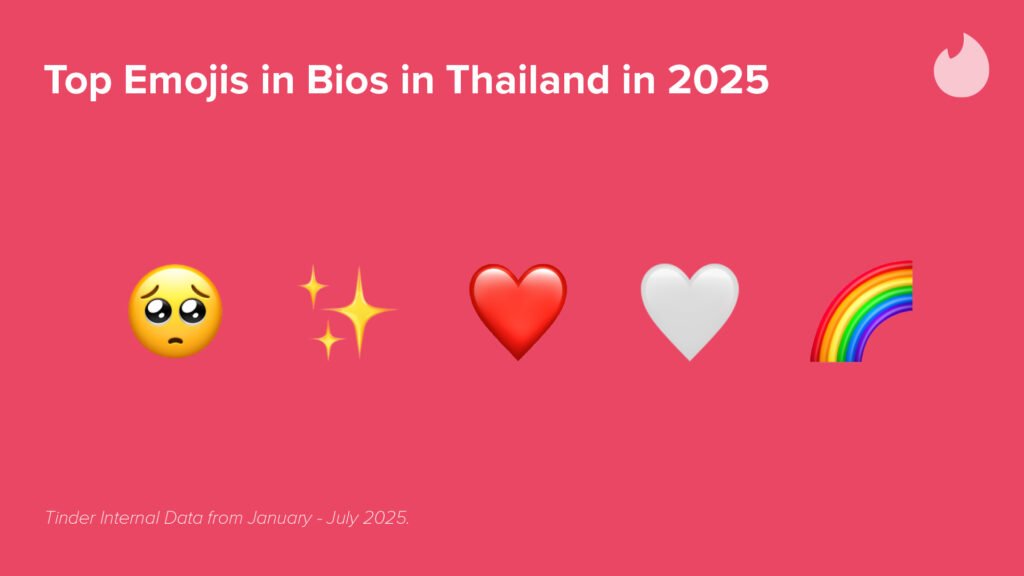
From the classic to the cryptic, emojis have become their own language of love, letting Gen Z daters say more with less, spark conversations, and show personality in ways words sometimes can’t. The unofficial language of dating, these are the most popular emojis on Tinder in Thailand in 2025:
Top Emojis in Bios in Thailand in 2025
Oh, and despite claims that Gen Z has “cancelled” emojis… The numbers tell a different story. Nearly a quarter of all Tinder users with emojis in their bios are aged 18 to 25, showing that while the tone may have changed (think: more ironic and layered and absolutely no  or
or  unless you want to sound passive-aggressive), the emoji is far from extinct.
Not every emoji hits the same (and potentially leads to ghosting)
While  ,
,  ,
,  , and
, and  appear most often in first messages exchanged on Tinder, setting the tone for something fun or flirty, other emojis might be sending things straight to ghost town.
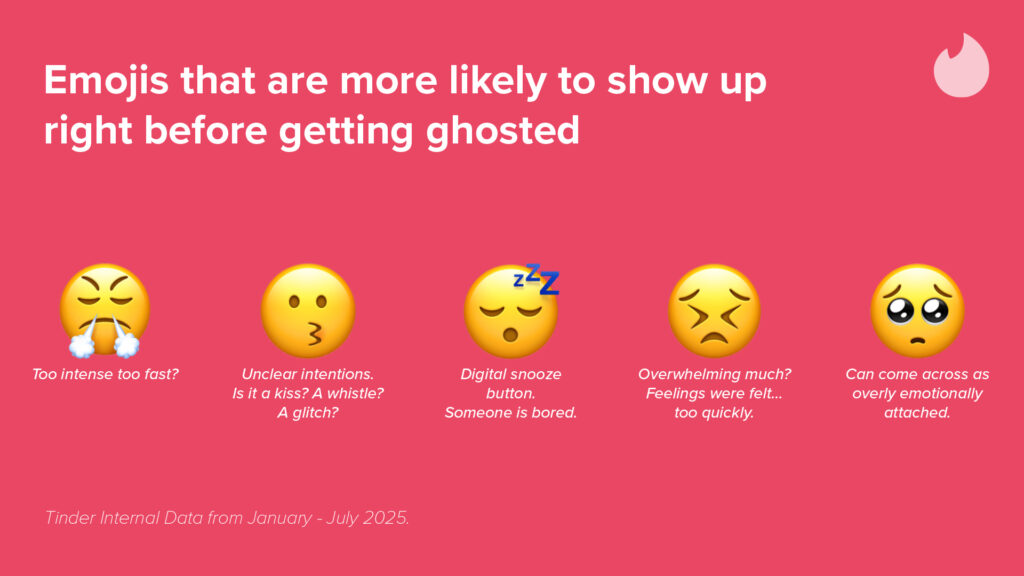
Tinder data reveals that certain emojis are more likely to show up right before someone gets ghosted, and here is why this might happen:
Oh and in case you are wondering… Tinder internal data shows that sending a  and a
and a  in a message cuts your chances of exchanging contact info almost in half, so unless you’re both aligned on your conversation type, it might be best to save the fruit and veg for your grocery list.