
Marketbuzzz Survey Shows 42% of Citizens Concerned About Rising Prices While Official Data Reports Deflation
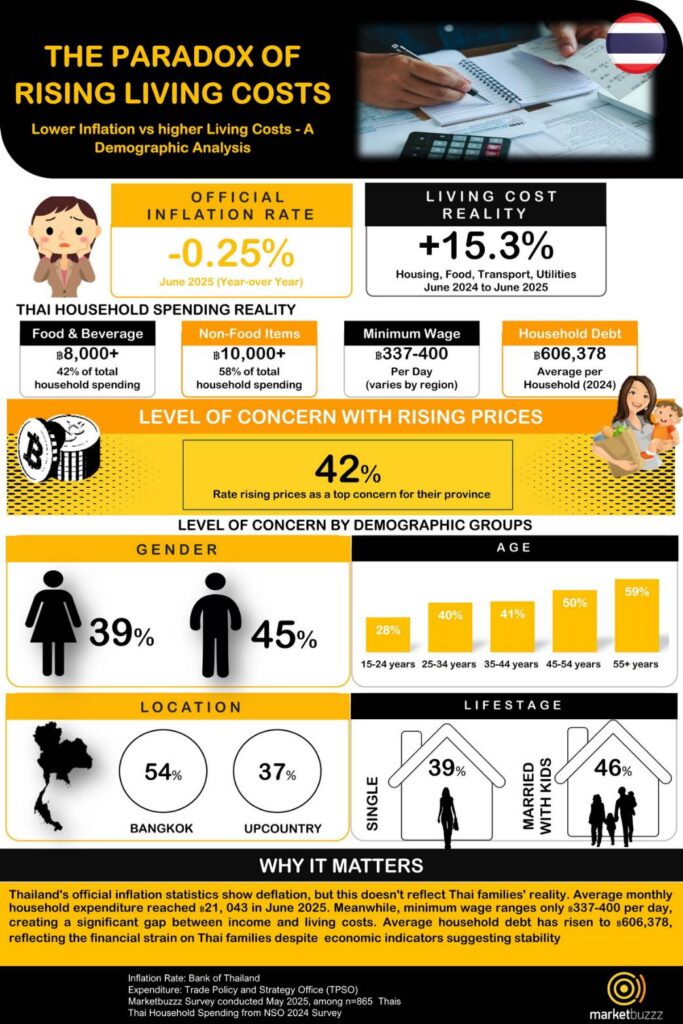
Thais are experiencing increasing financial stress from the rising cost of living, even as official inflation data suggests a period of deflation. According to a new nationwide survey by Marketbuzzz, 42% of Thai citizens identified rising prices as a top concern in their province. This contrasts with government figures showing deflation at -0.25% year-on-year as of June 2025.
However, the reality on the ground paints a different picture. The cost of essentials—including housing, food, transport, and utilities—has increased by 15.3% year-on-year, continuing to strain household budgets across the country.
Households Feel the Strain
The Marketbuzzz study, conducted with 865 Thais nationwide, reveals how many families are struggling under the weight of everyday expenses, even as wages stagnate. This growing disconnect between official economic indicators and daily realities is especially pronounced among specific groups.
- Life-stage pressure: Married couples with children report the highest level of concern at 46% versus 39% among single individuals.
- Age-related strain: Older Thais (55+ years) report the most financial pressure (59%), often due to supporting extended families.
- Regional variation: Urban areas like Bangkok report greater concern (54%) than upcountry regions (37%), where cost-management behaviors are more entrenched.
The Numbers Behind the Pressure
According to National Statistical Office (NSO) 2024 data referenced in the study:
- ฿18,207: Average monthly household expenditure (as of Dec 2024)
- ฿8,000+: Average spent on food and beverages—42% of monthly spend
- ฿10,000+: Monthly non-food expenses—58% of household spending
- ฿606,378: Average household debt across the country
Income-Expenditure Gap Continues to Widen
With the daily minimum wage ranging from only ฿337 to ฿400, many Thai families face a widening gap between income and basic living expenses.
“The survey underlines the real pain points – it’s not just about low levels of inflation, it’s the rising prices of essential goods and services like housing, utilities, healthcare, and transportation,” said Grant Bertoli, CEO of Marketbuzzz.

“We need a more holistic measure of economic wellbeing. While headline inflation might be flat or negative, the reality is that essential living costs continue to pressure household budgets, and it affects different demographic groups disproportionately” Bertoli added.
Looking Ahead from here
Many Thais are already adjusting their spending and, in some cases, taking on additional debt to cope with rising expenses—adding to the ongoing burden of managing household finances. If the cost of living continues to rise while incomes remain unchanged or decline, the strain on individuals and especially families is likely to intensify
- Behavioral shifts: Families are already adjusting their spending to avoid increasing debt, but this often means cutting back on essential needs.
- Longer-term strain: If incomes continue to stagnate while basic costs rise, the long-term effect will be reduced quality of life, increased debt risk, and growing inequality.
The cost of living is more than just a number – it’s a daily reality felt by millions of Thais. This underscores a more holistic approach to truly understand the pressures households face, going beyond headline figures to reflect the real experiences on the ground. A broader, people-centered approach to measuring economic health is critical—not just macroeconomic indicators, but also keeping a pulse on what people are actually experiencing.